
Buyer’s guide

Best Twin Mattress for Kids: Top Picks by Age and Bed

Choose a twin mattress by your child’s age first, then by the bed it sits on. Our best overall pick is the Helix Kids 8-Inch, with a firmer side for ages 2 to 7 and a softer one for 8 and up. For a toddler leaving the crib, look at the extra-firm Naturepedic 2-in-1.

Helix Kids 8-Inch mattress
Our #1 pick

Helix Kids 8-Inch

Premium price range

Height8 in
TypeTwo-sided hybrid
Feel (brand)Firmer side for ages 2–7, softer for 8+

See ratings & reviews ↗ · All 7 picks

Top picks at a glance

The best twin mattresses for kids, by what you need

Seven mattresses that cover how most families actually use a twin bed. Each one is here for a reason, and each card says who should skip it.

Best overall#1
Helix Kids 8-Inch mattress

Helix Kids 8-Inch

Premium price range

Two sides in one: firmer for ages 2 to 7, softer for 8 and up, with coils in the middle. The top overall pick across several editors’ lists.

See full specs ›
Best for toddlers#2
Naturepedic 2-in-1 Organic Kids mattress

Naturepedic 2-in-1 Organic Kids

Premium price range

Foam-free and extra firm, with a waterproof wipe-clean side for the potty-training years and a quilted side for later.

See full specs ›
Best two-sided value#3
Nectar Kids 8-Inch mattress

Nectar Kids 8-Inch

Mid-range price range

The flip-as-they-grow idea at a Mid-range price, with a cover that goes in the washing machine.

See full specs ›
Best budget#4
Linenspa 8-Inch Hybrid mattress

Linenspa 8-Inch Hybrid

Budget price range

Gel memory foam over encased coils at a Budget price, for a school-age child on a standard twin frame.

See full specs ›
Best for bunk beds#5
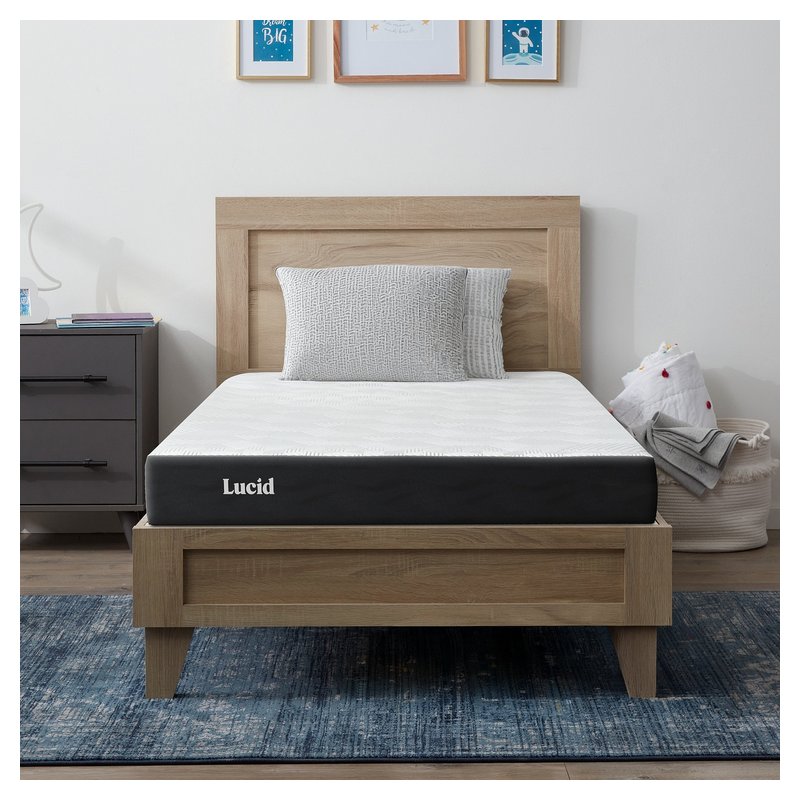
Lucid 5-Inch Gel Memory Foam mattress

Lucid 5-Inch Gel Memory Foam

Budget price range

A 5-inch firm profile that fits tight bunk and loft limits, with a 100-night brand trial listed.

See full specs ›
Best organic#6
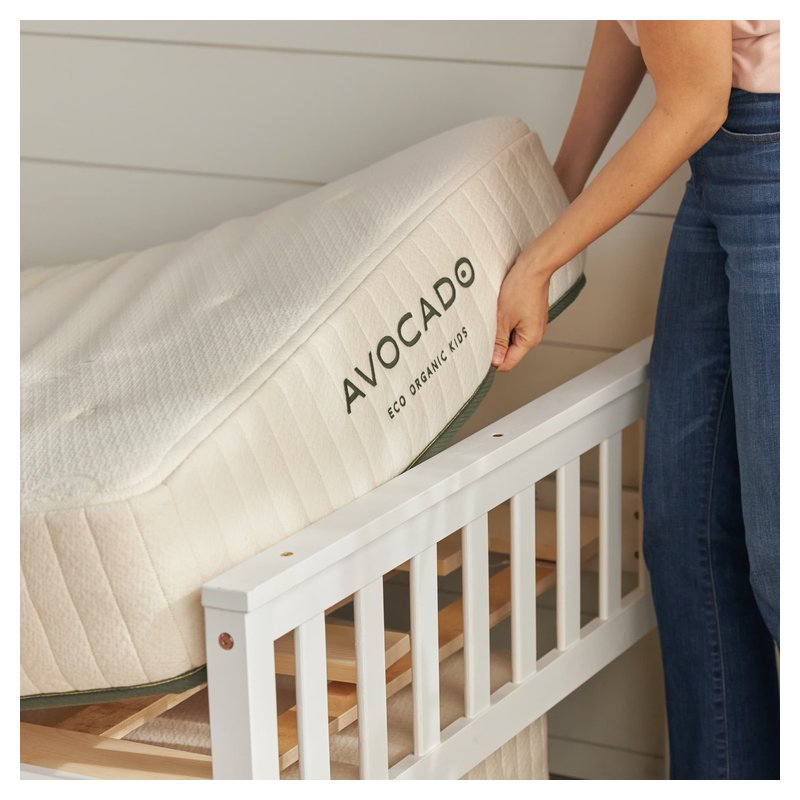
Avocado Eco Organic Kids mattress

Avocado Eco Organic Kids

Premium price range

GOTS organic cotton and GOLS organic latex over coils, with each certification named by what it covers.

See full specs ›
Best for bed-wetting#7
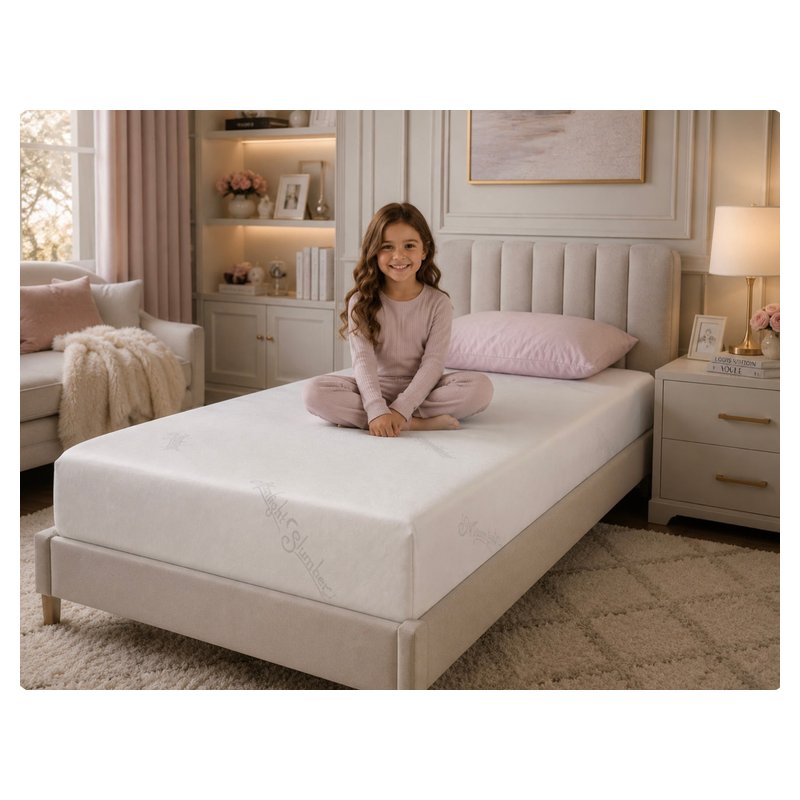
Moonlight Slumber Little Dreamer Deluxe mattress

Moonlight Slumber Little Dreamer Deluxe

Mid-range price range

A waterproof, wipe-clean performance cover built into the mattress, plus a washable fitted cover on top.

See full specs ›

Prices change often, so we show a price range instead of a number. For a twin: Budget is under $250, Mid-range $250–$500, Premium over $500, based on typical list prices.

Find your match

Start from your child and their bed

A mattress that suits a 3-year-old on a floor bed can be wrong for a 10-year-old on a top bunk. Pick the line that sounds most like you.

Naturepedic 2-in-1 Organic Kids mattress

We are leaving the crib

Start with

Naturepedic 2-in-1 Organic Kids

A toddler moving to a first big bed usually does best on a firm surface with an easy-clean side. We leave memory foam tops out of our top three here.

Lucid 5-Inch Gel Memory Foam mattress

It goes on a bunk or loft bed

Start with

Lucid 5-Inch Gel Memory Foam

Your bed’s manual sets the maximum mattress thickness, and the guardrail must clear the mattress by 5 inches. Thin mattresses are the place to start.

Moonlight Slumber Little Dreamer Deluxe mattress

Accidents happen here

Start with

Moonlight Slumber Little Dreamer Deluxe

A waterproof cover, a wipe-clean side or a fully washable design all solve this differently. Stains can also affect a warranty.

Avocado Eco Organic Kids mattress

I want organic materials

Start with

Avocado Eco Organic Kids

Look at what each certification covers. Some apply to the finished mattress and others to one layer, and CertiPUR-US does not mean organic.

Linenspa 8-Inch Hybrid mattress

I need to keep the cost down

Start with

Linenspa 8-Inch Hybrid

A Budget twin can be a good first bed, but it comes with thinner comfort layers, fewer stated terms and often a cover that does not come off.

Helix Kids 8-Inch mattress

They are growing fast

Start with

Helix Kids 8-Inch

Two-sided mattresses and thicker builds last longer as a child grows. Sleep Foundation says a twin can be outgrown, so think ahead to a twin XL or full.

Our picks in detail

What each mattress does well, and who should skip it

Specifications come from each brand or retailer; notes draw on pediatric and government guidance and independent reviews. We did not test these mattresses. How we pick.

Best overall#1

Helix Kids 8-Inch

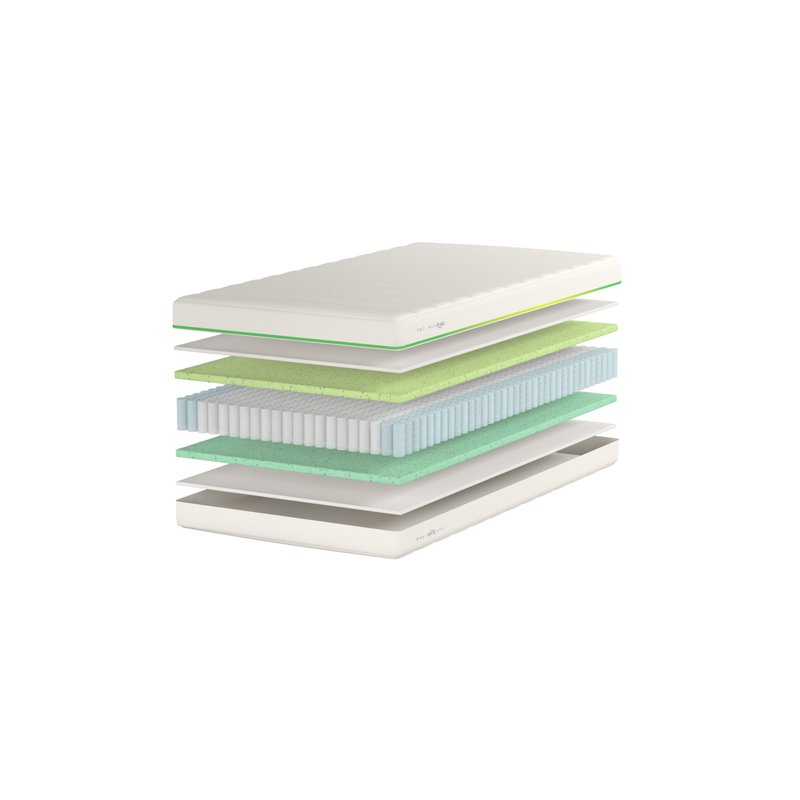
Helix built this one to change with the child: flip it and the feel changes. Helix sets the firmer side for ages 2 to 7 and the softer side for ages 8 and up, with 6-inch wrapped coils in the middle. It is the pick Sleep Foundation, Fortune, Sleepopolis and Mattress Clarity each name best overall.

Why it stands out

  • Two sides on one mattress: Helix Responsive Foam on the firmer side, gel memory foam on the softer side.
  • GREENGUARD Gold certified, with CertiPUR-US foams. Helix also states it is fiberglass-free.
  • Helix lists a 365-night trial and limited lifetime warranty, though editors have cited shorter trials and those terms were not confirmed for retailer purchases.
Height8 in
TypeTwo-sided hybrid
Feel (brand)Firmer side for ages 2–7, softer for 8+
CertificationsGREENGUARD Gold, CertiPUR-US foams
CoverTENCEL, water-repellent finish

Good fit if

  • You want one twin to cover the years from a young child to a tween.
  • You prefer coils with foam over an all-foam bed.
  • A water-repellent cover is enough for your household.

Skip it if

  • You need a waterproof mattress: the cover is water-repellent, not waterproof.
  • The bed is a bunk or trundle with limited rail height: 8 inches may be too tall.
  • You want certified organic materials.
Best for toddlers#2

Naturepedic 2-in-1 Organic Kids

There is no polyurethane foam, latex or wool in this one, and each side has a job. The waterproof side, which wipes clean, is for the little-kid and potty-training years; flip it to the quilted side for later. Naturepedic describes the feel as extra firm, and the materials list is one of the most spelled out in this guide.

Why it stands out

  • Certified by GOTS (organic cotton and manufacturing), MADE SAFE and GREENGUARD Gold.
  • A 5-inch innerspring with a 1.5-inch microcoil comfort layer on the big-kid side.
  • Naturepedic lists a 100-night trial. Its pages show both a 25-year and a lifetime limited warranty, so confirm the terms before you buy.
Height7 in
TypeTwo-sided innerspring, no foam
Feel (brand)Extra firm
CertificationsGOTS, MADE SAFE, GREENGUARD Gold
CoverOrganic cotton, waterproof little-kid side

Good fit if

  • You are moving a toddler out of a crib and want a firm surface.
  • Potty training is underway and a wipe-clean side would save you work.
  • You want a foam-free mattress with its certifications named.

Skip it if

  • You want a soft feel: the brand calls it extra firm.
  • Accidents are likely on the quilted side: the brand suggests a protector there.
  • A Premium price is out of reach.

Naturepedic says placing its mattress directly on the floor will void the warranty, so this is not the one for a floor bed.

Best two-sided value#3

Nectar Kids 8-Inch

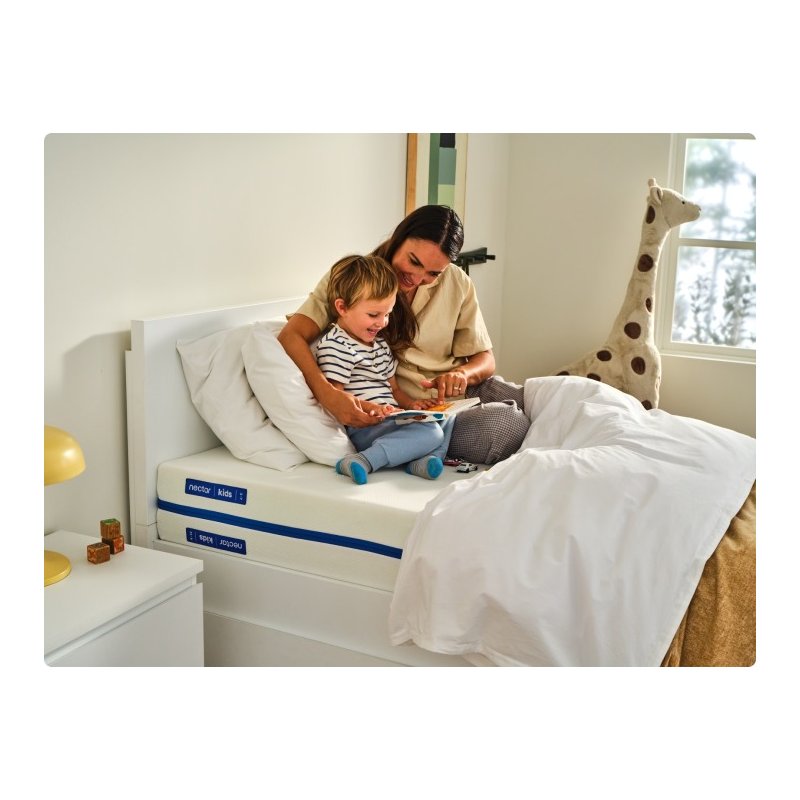
This is the two-sided idea at a Mid-range price. Nectar says one side gives firmer support for little ones and the other adds cushioning for older kids, and the cover comes off for the washing machine. Sleep Foundation calls it most comfortable; Sleepopolis and Mattress Clarity pick it as their memory foam choice.

Why it stands out

  • Dual-sided memory foam, so you can flip it as your child grows instead of buying twice.
  • The cover is removable and machine washable, treated to resist stains and moisture.
  • CertiPUR-US foams and OEKO-TEX Standard 100 fabrics. Nectar states it is fiberglass-free and lists a 365-night trial and Forever Warranty.
Height8 in
TypeTwo-sided memory foam
Feel (brand)Firmer side and cushioned side
CertificationsCertiPUR-US foams, OEKO-TEX fabrics
CoverRemovable, machine washable

Good fit if

  • You like the flip-as-they-grow idea but not a Premium price.
  • A washable cover matters more to you than coils.
  • Your child is past the toddler stage.

Skip it if

  • Your child is a young toddler: Sleep Foundation advises against memory foam for young children, though it also lists this mattress among its kids’ picks.
  • You want waterproofing built in; Nectar makes no waterproof claim.
  • You want organic certification: OEKO-TEX covers the fabrics only.
Best budget#4

Linenspa 8-Inch Hybrid

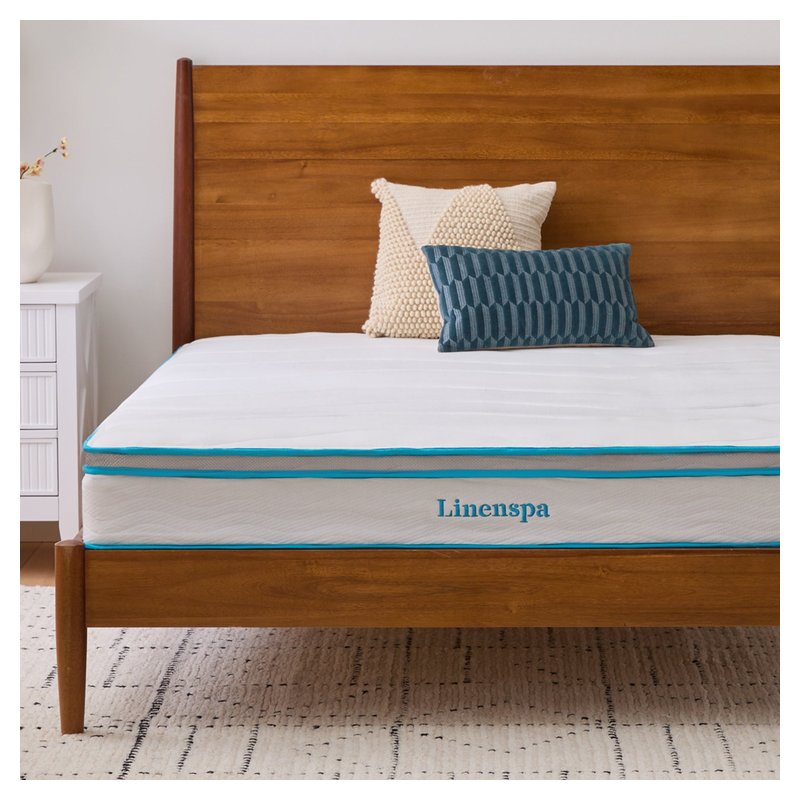
Coils and gel memory foam at a Budget price are the whole appeal here. Linenspa rates it medium-firm, BestReviews calls it firm, and editors at BestReviews and Mattress Guide Pro both call it a strong value. It suits a school-age child on a standard twin frame.

Why it stands out

  • Gel memory foam over individually encased coils, rather than foam alone.
  • CertiPUR-US foam, according to Linenspa.
  • Linenspa lists a 10-year limited warranty on US purchases. It lists no trial, so check the return terms where you buy.
Height8 in
TypeGel memory foam over coils
Feel (brand)Medium-firm
CertificationsCertiPUR-US foam
CoverDo not remove, spot clean

Good fit if

  • You want a coil and foam mix without leaving the Budget range.
  • An older child changes positions during the night.
  • The frame takes 8 inches without crowding any rail.

Skip it if

  • It is for a top bunk with limited rail height.
  • You need a washable cover: Linenspa says do not remove it and spot clean only.
  • Your child is a young toddler and you want to avoid memory foam.
Best for bunk beds#5

Lucid 5-Inch Gel Memory Foam

At 5 inches, this is thin enough for most bunk and loft manuals, and it is one of the few low-profile options that lists a firm feel and a trial. Lucid says it suits bunk beds. The foam includes bamboo charcoal, and the brand lists it as CertiPUR-US.

Why it stands out

  • Low 5-inch profile, sold in a firm variant.
  • Lucid lists a 100-night trial and 10-year limited warranty on US purchases.
  • Shipped rolled, with 24 to 48 hours to expand according to the brand.
Height5 in
TypeGel memory foam
Feel (brand)Firm
CertificationsCertiPUR-US
CoverDo not remove, spot clean

Good fit if

  • You have a top bunk or loft bed with a tight maximum mattress thickness.
  • You want a firm surface at a Budget price.
  • You will carry it up a ladder and want low bulk.

Skip it if

  • You need a removable cover: Lucid says spot clean, do not remove.
  • A heavier teen will use it for years; thin cores are more prone to sagging, Sleep Foundation says.
Best organic#6

Avocado Eco Organic Kids

If certified organic materials are your first filter, this is the most fully documented mattress here. Avocado pairs GOLS organic latex with up to 704 wrapped coils and a GOTS organic cotton cover, and uses no polyurethane foam. Forbes names it best twin overall and LeafScore its top pick.

Why it stands out

  • Certifications named by scope: GOTS on the finished product, GOLS on the latex, plus MADE SAFE and GREENGUARD Gold.
  • OEKO-TEX Standard 100 Class I on the finished mattress, according to Avocado.
  • Avocado lists a 100-night trial with a $99 return fee and a 10-year limited warranty.
Height7.5 in
TypeOrganic latex over coils, no polyurethane foam
Feel (brand)Medium-firm
CertificationsGOTS, GOLS (latex), MADE SAFE, GREENGUARD Gold
CoverGOTS organic cotton, no waterproof layer

Good fit if

  • Certified organic materials are your priority.
  • You want no polyurethane foam or added waterproof coating.
  • You need a lower profile: Avocado lists 7.5 inches (some reviewers say 7).

Skip it if

  • Bed-wetting is a concern: it has no waterproof layer, so add a protector.
  • Anyone in the home has a latex allergy; talk to your doctor first.
  • You want a two-sided mattress or your budget is under the Premium range.
Best for bed-wetting#7

Moonlight Slumber Little Dreamer Deluxe

This one is built around accidents. Moonlight Slumber puts a waterproof, wipe-clean performance cover on the mattress itself, then adds a removable, washable fitted cotton cover over it. One side has standard support and the other has plush memory foam. No editorial list we read names it, so this pick rests on brand and retailer details.

Why it stands out

  • The brand calls the permanent cover “Waterproof & Easy to Clean”; care is a damp sponge and mild soap.
  • GREENGUARD Gold certified on the brand page, with CertiPUR-US foam.
  • Lifetime product warranty per the brand, though another image on the same page says limited lifetime.
Height6.5 in
TypeTwo-sided foam
Feel (brand)Standard side and plush memory foam side
CertificationsGREENGUARD Gold, CertiPUR-US foam
CoverWaterproof, plus washable fitted cover

Good fit if

  • Bed-wetting or frequent spills are your main concern.
  • You want waterproofing built in, not added later.
  • You want a thinner foam mattress in the Mid-range.

Skip it if

  • You want a stated home trial: none is listed.
  • You want organic certification.
  • You want coils or no foam.

Separately, the FTC alleged in 2017 that two other Moonlight Slumber baby mattresses were not as organic as advertised. We found no organic certification listed for this model, so we judge it only on its waterproofing.

Side by side

Compare the specs

Scroll sideways on a phone. Feel is each brand’s own description.

MattressBest forHeightTypeFeel (brand)CertificationsPrice range
Helix Kids 8-InchBest overall8 inTwo-sided hybridFirmer side for ages 2–7, softer for 8+GREENGUARD Gold, CertiPUR-US foamsPremiumDetails ›
Naturepedic 2-in-1 Organic KidsBest for toddlers7 inTwo-sided innerspring, no foamExtra firmGOTS, MADE SAFE, GREENGUARD GoldPremiumDetails ›
Nectar Kids 8-InchBest two-sided value8 inTwo-sided memory foamFirmer side and cushioned sideCertiPUR-US foams, OEKO-TEX fabricsMid-rangeDetails ›
Linenspa 8-Inch HybridBest budget8 inGel memory foam over coilsMedium-firmCertiPUR-US foamBudgetDetails ›
Lucid 5-Inch Gel Memory FoamBest for bunk beds5 inGel memory foamFirmCertiPUR-USBudgetDetails ›
Avocado Eco Organic KidsBest organic7.5 inOrganic latex over coils, no polyurethane foamMedium-firmGOTS, GOLS (latex), MADE SAFE, GREENGUARD GoldPremiumDetails ›
Moonlight Slumber Little Dreamer DeluxeBest for bed-wetting6.5 inTwo-sided foamStandard side and plush memory foam sideGREENGUARD Gold, CertiPUR-US foamMid-rangeDetails ›

Want to see more than our seven picks?

Browse more twin mattresses ›

Not sure where to start?

For one mattress to last from the early years to the tween years, a two-sided twin is the easy answer. The Helix Kids 8-Inch has a firmer side for younger children and a softer side for later. Height, materials and what’s in the box are on the product page.

How to choose

Five things that matter more than the brand

Most buying mistakes come from a mattress that suits the wrong age, does not fit the bed or cannot be cleaned.

01

Age first, then firmness

AAP firm-surface rules are written for babies up to 1 year, and no medical body sets a firmness for older children. Sleep Foundation says toddler mattresses are usually medium-firm to firm, and it advises against memory foam for young children.

02

Height against the bed

Federal rules require a bunk’s guardrail to sit at least 5 inches above the mattress, and each manual names a maximum thickness. A DHP loft bed manual, for example, caps it at 6 inches. Check before you choose.

03

Certifications, by what they cover

CertiPUR-US says it certifies foam only. GOTS applies to textiles and finished products, GOLS to latex, and GREENGUARD Gold to chemical emissions. One label rarely covers the whole mattress, so read which part it applies to.

04

Waterproof is not water-resistant

Helix, Newton and Nectar describe their covers as water-repellent, water-resistant or moisture-resistant. Moonlight Slumber and Naturepedic’s little-kid side are the ones described as waterproof. Everything else needs a protector.

05

Where you buy changes the terms

Sleep Foundation says a retailer’s trial may be much shorter than a brand’s and that Zinus ties its trial to its own website. Warranties often name authorized sellers, so check who is selling before you rely on the terms.

FAQ

Twin mattresses for kids: questions answered

Straight answers to what parents ask before buying, drawn from pediatric and government sources, certifiers and brand pages. This is general information, not medical advice.

Does my child need a special mattress?5

What type of mattress is best for a child?

There is no single best type. For a toddler, Sleep Foundation says medium-firm to firm, and polyfoam rather than memory foam. For school-age kids, foam, hybrid and latex are all common. Newton Baby says there is no ideal firmness for older children because bodies and preferences differ. Match the mattress to your child’s age and to the bed it sits on.

Do kids need a special kids’ mattress?

No. A kids’ mattress is mostly a regular twin that is thinner, lower-cost or two-sided. We found no medical body that requires a child-specific design after age 1. The label does help if the brand adds what you need, such as a wipe-clean side, a washable cover or a firmer side for younger children.

Can kids use an adult mattress?

Yes, once they have outgrown crib safety rules, as far as the guidance we read goes. AAP firm-surface rules cover babies up to 1 year. The practical limits are height and feel: Sleep Foundation says thin mattresses often feel firmer to sleepers under 130 pounds. A thick adult bed may also be too tall for a bunk or a young climber.

Should a kid’s mattress be firm or soft?

Medium-firm to firm is the common editorial advice for younger children, but it is not a medical rule. The AAP’s firm-surface guidance applies to babies up to 1 year, and we found no medical body that sets a firmness for older kids. Sleep Foundation itself says both that younger kids benefit from firmer surfaces and that they often prefer softer ones.

Can a mattress help my child’s back or growth?

We found no study linking mattress type or firmness to children’s back pain, growth or height. Mattress trials for back pain enrolled adults. HealthyChildren.org says most children’s back pain comes from injuries and strain, and that a child under 10 with back pain should see a pediatrician. Choose a mattress for comfort and fit, not as a treatment.

Twin size, toddlers and first big beds5

What age can a child sleep in a twin bed?

There is no set age from the AAP. HealthyChildren.org says to leave the crib at about 35 inches tall or once a child can climb out. Nationwide Children’s says most children move to a bed by age 2, while UPMC says 2 to 3. CHOC says you can go straight to a twin instead of a toddler bed.

Can a 2-year-old sleep in a twin bed?

Many can, if they have outgrown the crib. UPMC lists twin beds with safety rails, or a twin mattress on the floor, as options for the move. Portable bed rails need care: CPSC says they are intended for ages 2 to 5, never under 2. Nationwide Children’s says to make sure rails sit flush with no gaps.

Is a toddler mattress the same size as a twin?

No. A toddler bed uses a crib-size mattress, about 28 by 52 inches. A twin is 38 by 75 inches, per the Better Sleep Council. The two are not interchangeable, so a crib mattress will not fit a twin frame. A toddler bed lets you keep your crib mattress, as Naturepedic notes; a twin bed needs a new mattress but lasts longer.

Is a twin or full better for a child?

A twin is cheaper, easier to move and works on bunks and daybeds, Saatva says, and it fits a small room: Leesa suggests a minimum of about 7 by 10 feet. A full is 16 inches wider for the same length. Sleep Foundation says preteens often benefit from a larger size and suggests sizing up to future-proof the bed.

Should I buy a twin XL for my kid?

Only if your child is likely to be tall and the frame takes it. A twin XL is 38 by 80 inches, 5 inches longer than a twin, and the Better Sleep Council calls it a good option for taller children. Sleep Foundation says a twin suits people under about 6 feet. Check your frame and bedding, since a twin XL will not fit a standard twin bed.

Moving out of the crib? Our toddler pick is firm, foam-free and has a wipe-clean side.See full specs
Thickness, bunk beds and foundations5

How thick should a child’s mattress be?

No medical body sets a number. Sleep Foundation says low-profile mattresses of about 4 to 8 inches suit children, and slim ones of 8 to 10 inches are comfortable for most kids. The real limit is often the bed. Bunks and loft beds have a maximum mattress thickness in the manual. Older, heavier kids may want a thicker build, since Sleep Foundation says thin cores are more prone to sagging.

What mattress is safe for a bunk bed?

The one your bed’s manual allows. Federal rule 16 CFR 1513 requires the guardrail’s upper edge to sit at least 5 inches above the mattress, and the manual must state the maximum mattress thickness. Sleep Foundation suggests 6 to 7 inches, Newton Baby 5 to 6, and one DHP loft manual caps it at 6. Any added topper counts toward that height.

How old should a child be for the top bunk?

At least 6. Federal rules require bunk bed instructions to warn: do not allow children under 6 to use the upper bunk. Newton Baby advises waiting until about 6 to 8. A Nationwide Children’s study in Pediatrics estimated about 36,000 bunk-related emergency cases a year in the US, with half involving children under 6.

Does a kid’s bed need a box spring?

Often not, depending on the mattress and frame. Sleep Foundation says all-foam mattresses are not designed for box springs and that platform beds generally do not need one, while innersprings are often designed to be used with them. Warranties can depend on the base, so check the brand’s rules. Nectar and Zinus warranties both say that an improper foundation can void coverage.

How far apart can bed slats be?

It depends on the brand. Leesa says no more than 3 inches, Modway says under 3, and Purple 3.5 inches. Kids’ frames can have wider gaps. If yours does, Nectar describes a bunkie board, a flat board one to three inches thick, as one fix, but remember that the board counts toward total height on a bunk.

Fitting a bunk or loft? Check your manual, then look at this 5-inch option.Check sizes & height
Foam, hybrid, innerspring or latex5

What is the difference between foam, hybrid, innerspring and latex?

Sleep Foundation describes memory foam as contouring and quiet but warmer, innerspring as bouncy and cooler but with weak pressure relief, hybrids as coils with a real comfort layer, heavier and pricier, and latex as bouncy, durable and costly. Consumer Reports adds that “hybrid” is a marketing term with no industry standard, so read the actual layers.

Is memory foam OK for kids?

It depends on age. CPSC staff and the AAP say memory foam is inappropriate for infants. Sleep Foundation says it is not recommended for young children, yet also lists memory foam models among kids’ picks with no stated age. We found no medical guidance for older kids. For a toddler, we prefer a mattress without a memory foam top, and we list some.

Do kids’ mattresses sleep hot?

Foam tends to hold more heat. Consumer Reports says foam can trap more heat, while innersprings run cooler. Sleep Foundation says latex effectively resists heat buildup. Newton’s airy polymer core is designed around airflow, by its own account. Room temperature matters too: Cleveland Clinic suggests 65 to 70° F for babies and toddlers; an NHS leaflet suggests cooler.

Do kids’ mattresses contain fiberglass?

Some do. Poison Control says fiberglass is often used to meet fire standards and that exposure can cause eye and skin irritation and lung problems if the cover is damaged or removed. CPSC staff told KXAN in 2020 it was not aware of health risks from textile fiberglass. Helix, Nectar, Bear, Modway and Leesa state they are fiberglass-free. Do not remove a cover unless the brand says it is designed to come off.

How long does a new mattress smell last?

Sources vary. Sleep Foundation says most odor fades within a few hours, with traces possibly lasting days or weeks in synthetic foam. Tom’s Guide says a few days on average and over a week for cheaper foam. EPA advises more ventilation when using products that release organic chemicals. Open the windows and let it air out before bedtime.

Want coils with foam and a side for each age?What parents say
Certifications and “non-toxic” labels5

What does CertiPUR-US mean?

It means the foam met limits set by the program. CertiPUR-US says certified foam has low VOC emissions, under 0.5 parts per million, and is made without formaldehyde, heavy metals and CPSC-regulated phthalates. It certifies foam only, not the cover or the mattress, and latex is outside its scope. The marks are owned by a foam industry nonprofit, the Alliance for Flexible Polyurethane Foam.

What does GREENGUARD Gold mean?

It is a low-emissions certification. UL says it screens products for more than 15,000 VOCs and that the Gold tier has lower limits, aimed at settings such as schools, nurseries and healthcare facilities. It concerns chemical emissions, not whether materials are organic. Several picks here carry it, including Helix, Bear, Leesa, Newton and Naturepedic.

What makes a mattress organic?

A certification should say so, and what it covers matters. GOTS says products with its “Organic” grade have at least 95% certified organic fibers. GOLS covers organic latex. USDA says GOTS textiles can be sold as organic but cannot carry the USDA seal. Sleep Foundation warns that CertiPUR-US on a mattress sold as organic is a red flag.

Is there any such thing as a non-toxic mattress?

Treat the phrase with caution. The FTC Green Guides say it is deceptive to misrepresent a product as non-toxic, and that the term likely conveys no risk to people or the environment. FTC cases have targeted mattress sellers over chemical-free and self-issued claims. Consumer Reports says GOTS or GOLS reduce risk but do not guarantee safety. Look for named certifications instead.

Should I worry about chemicals in children’s mattresses?

Researchers are still working that out. University of Texas engineers found new crib mattresses released about four times the VOCs of old ones. 2025 University of Toronto-led studies found phthalates and flame retardants in low-cost children’s mattresses, but did not quantify health risk. EPA says little is known about typical home VOC levels. Airing out and choosing certified materials are reasonable steps.

Certified organic is your first filter? This one names what each label covers.Check materials & certifications
Accidents, cleaning and allergies5

What is the best mattress for a child who wets the bed?

Any mattress with good protection, or one with built-in waterproofing. The AAP says a plastic cover under the sheets protects the mattress, and NIDDK suggests layering waterproof pads and fitted sheets so you can strip the bed fast. Moonlight Slumber and Naturepedic’s little-kid side are described as waterproof by their brands.

How common is bed-wetting?

Common, and usually not a concern at younger ages. NIDDK says about 1 in 6 five-year-olds and 1 in 10 seven-year-olds wet the bed; the AAP says 15% of 5- and 7-year-olds. Mayo Clinic says it is generally not a concern before age 7. See your pediatrician if it continues after that, or if it restarts after months of dry nights.

How do I clean urine out of a kid’s mattress?

Strip the bed and launder bedding, then blot without rubbing. Sleep Foundation suggests spraying equal parts water and vinegar with a little detergent, letting it sit about 15 minutes, blotting again and covering with baking soda for several hours before vacuuming. It warns that hydrogen peroxide can damage foam or latex. Check the brand’s own care instructions first.

Can a stain void a mattress warranty?

It can. The Zinus warranty excludes water damage, mold and stains, and Nectar’s excludes liquid damage. Tom’s Guide says stains can void a claim even when unrelated to the defect. Sleep Foundation says some policies may be voided by evidence of bed-wetting. A protector or encasement is inexpensive insurance, but check the terms for your brand.

Does the type of mattress matter for dust mite allergies?

We found no allergy group recommending one type. AAAAI and Mayo Clinic advise encasing mattresses and pillows and washing bedding in hot water at 130° F or more. Evidence is mixed: a Cochrane review found no single measure effective for asthma, while a later trial in allergic children found fewer severe flares with mite-proof bedding. Ask your child’s doctor.

Accidents are the main concern? This cover wipes clean and is built in.Read parent reviews
Cost, lifespan and buying5

How much should a twin mattress for kids cost?

Prices vary widely. Sleep Foundation lists an average of $500 for all-foam twins, $600 for innerspring and about $1,100 to $1,150 for latex and hybrid, while its kids’ picks range from $249 to $799. Consumer Reports says price alone does not decide quality. A Budget mattress can be a good first bed, with thinner layers and fewer stated terms.

How long does a kid’s mattress last?

Plan for several years, not a childhood. We found no medical figure. Sleep Foundation says mattresses should be replaced every 6 to 8 years, with about 5.5 to 6.5 years for innerspring, 6 to 7 for foam, 6.5 to 7.5 for hybrid and 7.5 to 8.5 for latex. Jumping and rough play can shorten that, a Canadian retailer notes.

When should I replace my child’s mattress?

Replace it when you see damage or sagging, or when your child outgrows it. Sleep Foundation says to upgrade if you notice visible damage, creaky springs or sagging. A child who has outgrown a thin mattress or a twin length is also a reason. A child who wakes sore should see a pediatrician, because we found no evidence that a mattress is the cause.

Do brand trials and warranties apply if I buy from a retailer?

Not always. Sleep Foundation says a third-party retailer’s trial may be much shorter, and that Zinus’s 100-night trial applies to purchases on its own website. Nectar’s warranty covers first buyers from Nectar or an authorized retailer, and Sealy excludes unauthorized resellers. Check who the seller is and what the listing says before you count on any term.

How long does a boxed mattress take to expand?

Usually one to three days. Zinus says 48 to 72 hours for full recovery, and Classic Brands 24 to 72 hours. Cold delivery may take longer. Sources differ on the first night: Zinus says sleeping on it right away is fine, though it may feel firmer, while Tom’s Guide says most makers advise waiting at least 24 hours.

Want to see more options in your price range?Browse twin mattresses

How we pick

How this guide is put together

  • We compare each brand’s published specifications: height, construction, stated firmness, certifications, cover and terms.
  • We read AAP, CPSC, NIH and Mayo Clinic guidance, certifier websites and independent reviews.
  • We look for agreement across sources, and we say when sources disagree or when no evidence exists.
  • We do not test mattresses, accept free products or take payment for placement.

What a mattress can and cannot do

A mattress is a place to sleep. We found no evidence that any mattress type changes a child’s back health, growth or height, and none here treats allergies or bed-wetting. If you are worried about your child’s sleep or back pain, ask your pediatrician.

Read how we pick →

The right age, the right bed, an easy cleanup

Check your bed’s manual for the maximum thickness, match the feel to your child’s age, and plan for spills. If you are unsure, start with our best overall pick and read what other parents say.