
Best overall budget#1
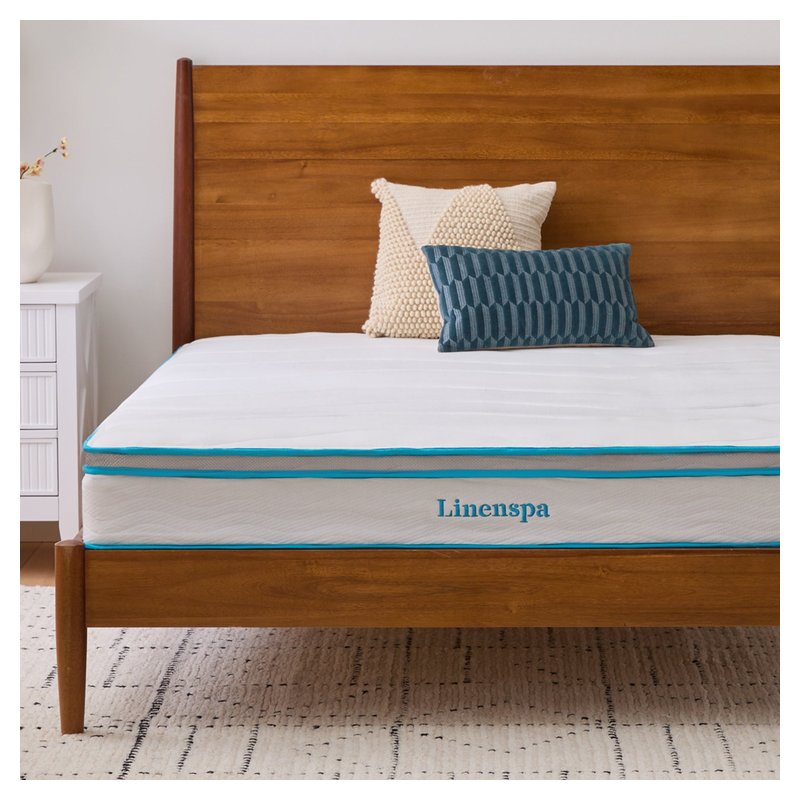
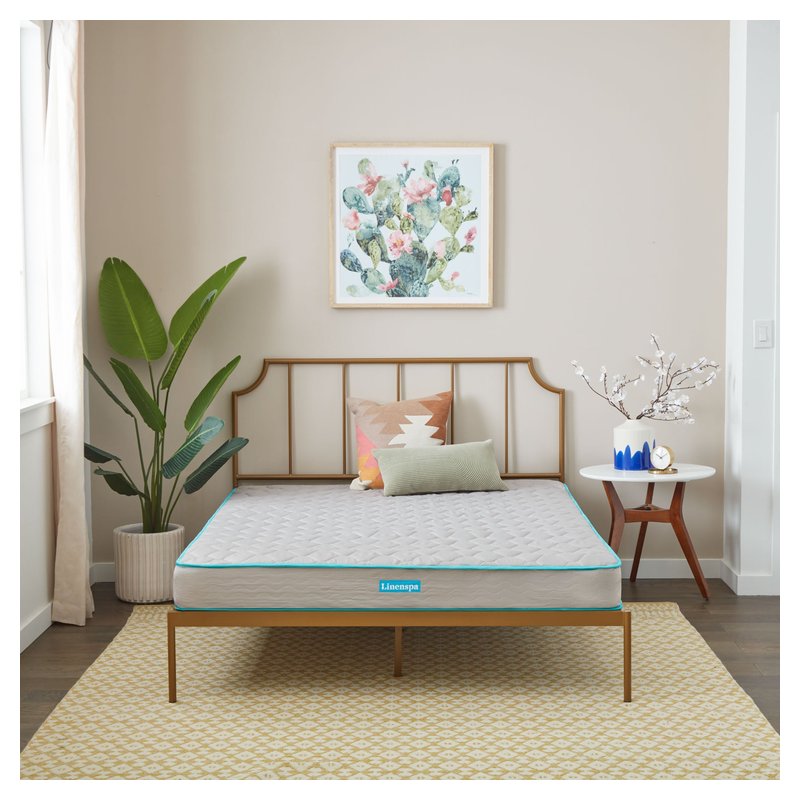
Linenspa 8-Inch Hybrid
Coils and gel memory foam at a Budget price are the whole appeal here. Linenspa rates it medium-firm, BestReviews calls it firm, and editors at BestReviews and Mattress Guide Pro both call it a strong value. It suits a school-age child on a standard twin frame.
Why it stands out
- Gel memory foam over individually encased coils, rather than foam alone.
- CertiPUR-US foam, according to Linenspa.
- Linenspa lists a 10-year limited warranty on US purchases. It lists no trial, so check the return terms where you buy.
Height8 in
TypeGel memory foam over coils
Feel (brand)Medium-firm
CertificationsCertiPUR-US foam
CoverDo not remove, spot clean
Good fit if
- You want a coil and foam mix without leaving the Budget range.
- An older child changes positions during the night.
- The frame takes 8 inches without crowding any rail.
Skip it if
- It is for a top bunk with limited rail height.
- You need a washable cover: Linenspa says do not remove it and spot clean only.
- Your child is a young toddler and you want to avoid memory foam.