
Best overall for bunks#1
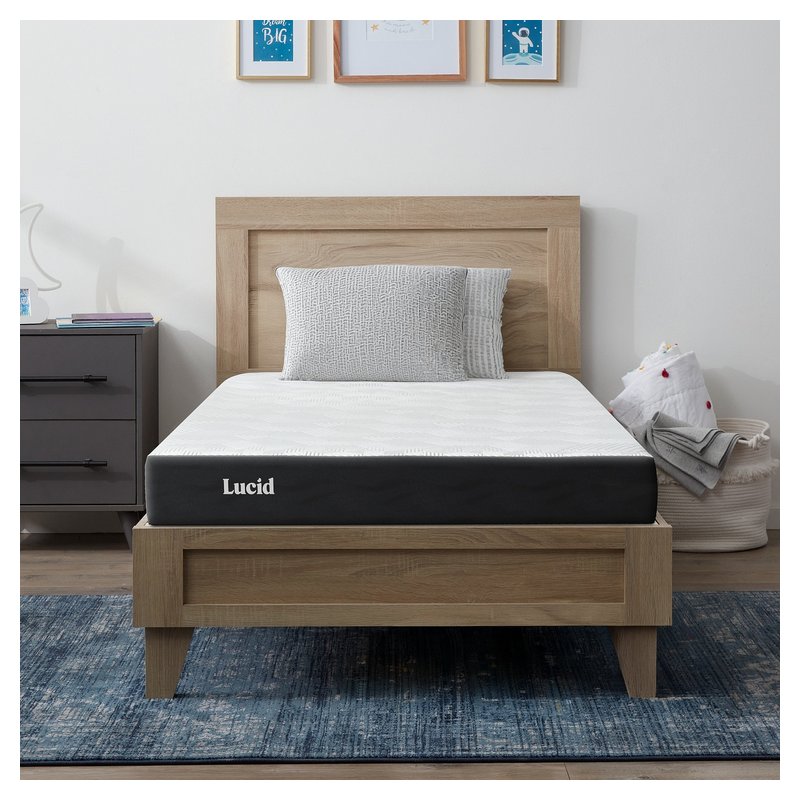
Lucid 5-Inch Gel Memory Foam
At 5 inches, this is thin enough for most bunk and loft manuals, and it is one of the few low-profile options that lists a firm feel and a trial. Lucid says it suits bunk beds. The foam includes bamboo charcoal, and the brand lists it as CertiPUR-US.
Why it stands out
- Low 5-inch profile, sold in a firm variant.
- Lucid lists a 100-night trial and 10-year limited warranty on US purchases.
- Shipped rolled, with 24 to 48 hours to expand according to the brand.
Height5 in
TypeGel memory foam
Feel (brand)Firm
CertificationsCertiPUR-US
CoverDo not remove, spot clean
Good fit if
- You have a top bunk or loft bed with a tight maximum mattress thickness.
- You want a firm surface at a Budget price.
- You will carry it up a ladder and want low bulk.
Skip it if
- You need a removable cover: Lucid says spot clean, do not remove.
- A heavier teen will use it for years; thin cores are more prone to sagging, Sleep Foundation says.