
To choose a twin mattress for a child, check six things in order: your child’s age, firmness, the height your bed allows, materials and what each label covers, how the cover cleans, and who sells it. Age and the bed frame narrow the list fastest, because a young toddler or a top bunk rules out many models before you compare anything else.
Two limits apply. A twin is never for a baby under 1, the group the AAP’s firm-surface guidance covers. And no medical body sets a firmness for children older than 1, so the ratings below are a brand’s or an editor’s view. We have not tested or used these mattresses ourselves; specs come from the brand or the source named.
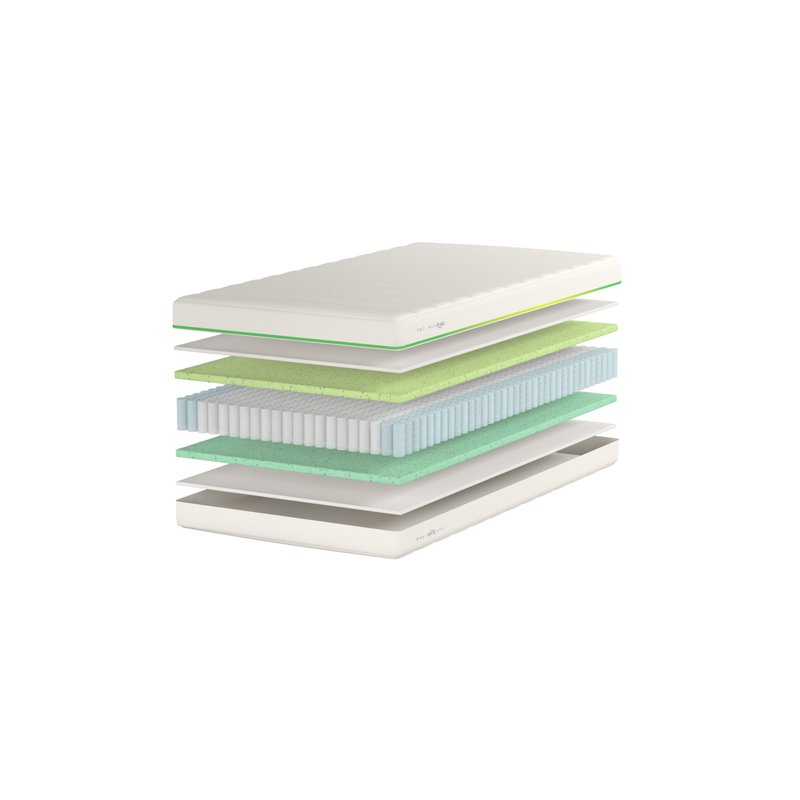
Check 1: your child’s age and stage
Sources differ on when children leave the crib: Nationwide Children’s Hospital says most move to a bed by age 2, UPMC says the move typically occurs between 2 and 3, and Sleep Foundation, an editorial guide, gives about 18 months to 3 years.
| Stage | What sources and brands say | Where to look first |
|---|---|---|
| Leaving the crib | Sleep Foundation says most toddler mattresses are medium-firm or firm. It advises against memory foam for young children, yet its kids’ guide lists a memory foam pick without stating an age. | Naturepedic 2-in-1, Newton, Linenspa 6-Inch or the Helix firmer side |
| School age | Helix sets its softer side for ages 8 and up, and Leesa aims its Youth model at the same age. | Two-sided models, or thicker builds on a standard frame |
| Preteens and taller kids | Sleep Foundation says preteens often benefit from a full or queen. The Better Sleep Council calls twin XL a good option for taller children. | A larger size, if the room allows it |
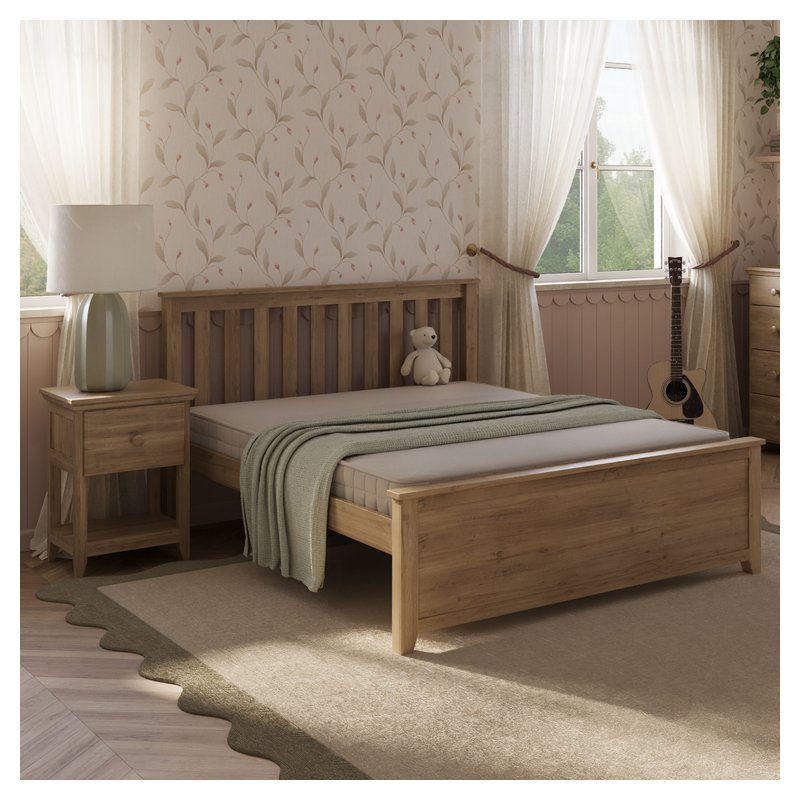
For leaving the crib · Premium price range
Naturepedic 2-in-1 Organic Kids
Naturepedic lists no polyurethane foam, latex or wool, and calls the feel extra firm in one place and firm in another. It says the little-kid side is waterproof and wipes clean. Height: 7 inches per the brand, 7 3/4 per a Home Depot listing title.
Check materials & certifications ›For shortlists, see the best twin mattresses for toddlers and the twin mattresses for growing kids.
Check 2: firmness, and whose opinion it is
The AAP says a baby should sleep on a firm, flat surface, and its recommendations apply to children up to 1 year old. That guidance was not written for twin beds. No medical body sets a firmness for children older than 1.
What’s left is editorial and brand opinion, and it isn’t uniform. Sleep Foundation rates most toddler mattresses “a 6 to 7 on the firmness scale.” The same site’s kids’ guide says younger kids often benefit from a firmer surface and also that they often prefer a softer one. Newton Baby, a brand, says there is no ideal firmness for older children.
Sleep Foundation says mattresses tend to feel firmer to sleepers under 130 pounds, so a bed that feels medium to you may feel firmer to a light child.
We found no study or medical body linking mattress type or firmness to a child’s back pain or growth, so think of firmness as a comfort choice, not a health one.
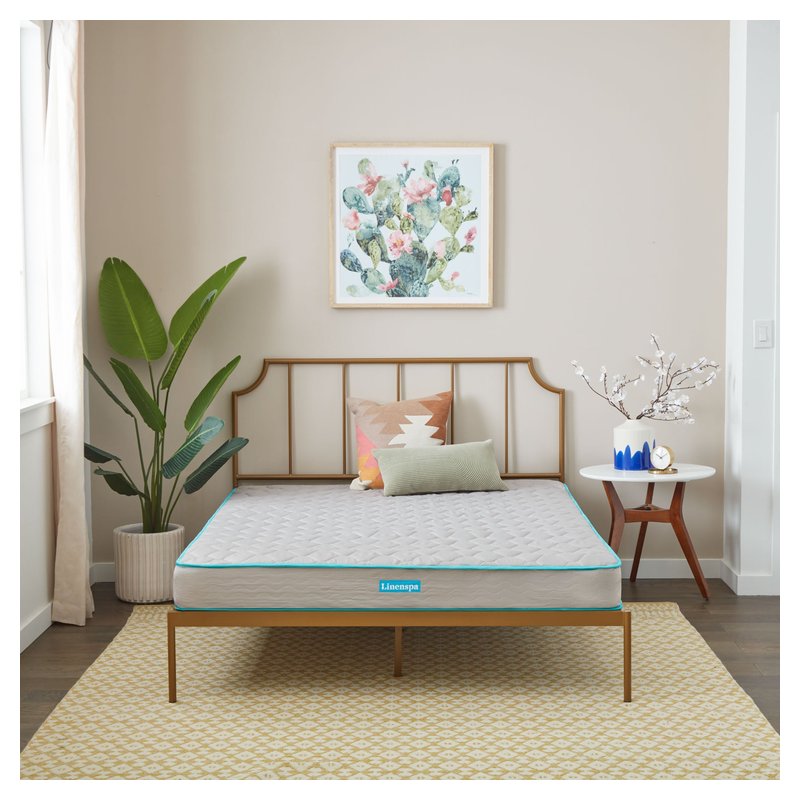
A low-cost coil option · Budget price range
Linenspa 6-Inch Innerspring
Steel coils with comfort foam quilted into the cover, so there is no thick memory foam layer. Linenspa’s page says both “firm feel” and “medium-firm.” The brand says it suits bunk beds, trundles and daybeds, and says not to remove the cover.
See details ›Ask your pediatrician about back pain or ongoing sleep problems. HealthyChildren.org says to see a pediatrician about back pain if the child is under 10, and its page does not mention mattresses.
Check 3: the height your bed allows
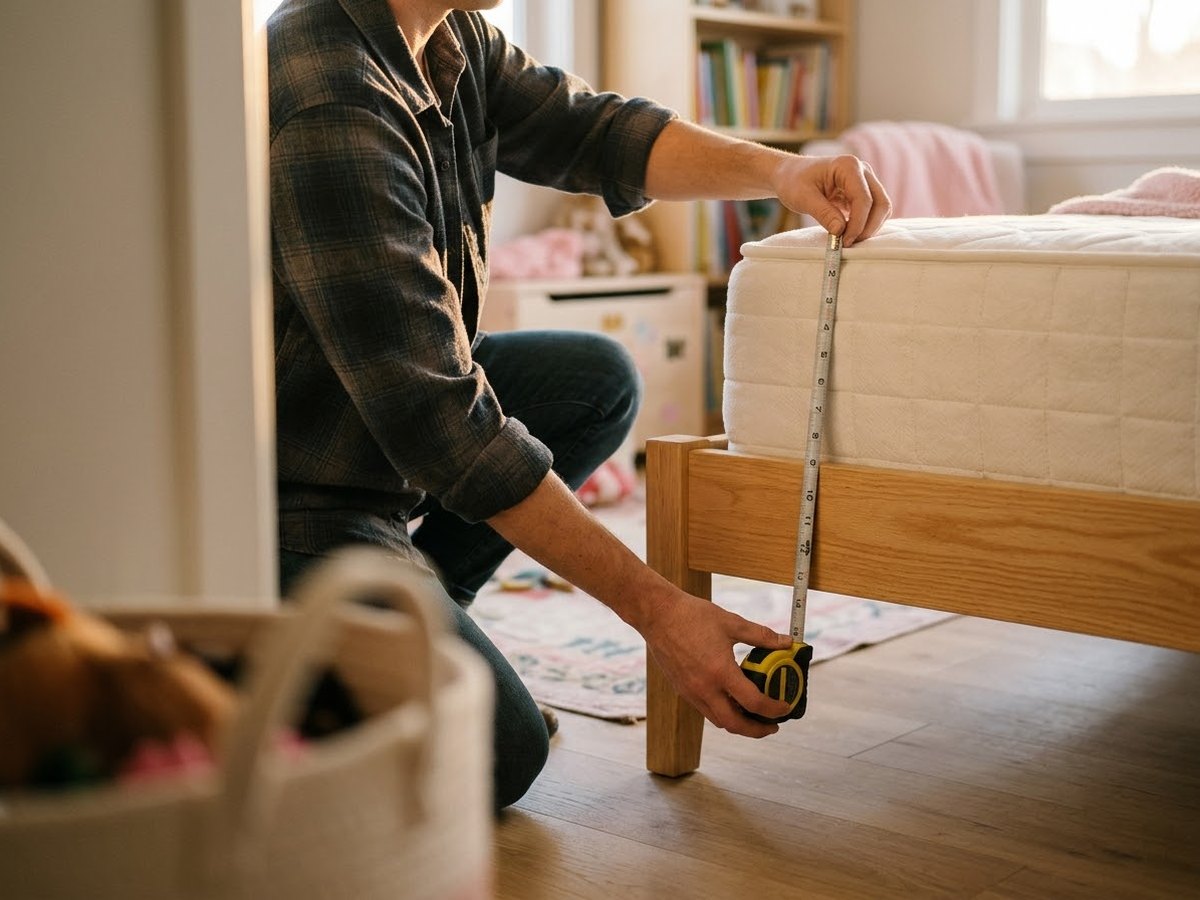
Measure the bed before you shop. Federal bunk bed rules require the guardrail’s upper edge to be at least 5 inches above the mattress, and they require the bed’s instructions to state the maximum mattress and foundation thickness. Check your bunk bed’s manual for that number.
- Bunks and lofts: Sleep Foundation suggests 6 to 7 inches, Newton Baby lists 5 to 6 for a twin, and one DHP loft bed manual caps it at 6. The manual for your bed decides.
- Standard frames: Sleep Foundation says low-profile models of roughly 4 to 8 inches suit children, and 8 to 10 inches is comfortable for most children.
- Top bunks: federal rules require a warning against children under 6 using the upper bunk, and Newton Baby advises waiting until about 6 to 8.
Compare models in our guide to twin mattresses for bunk and loft beds.
Check 4: materials, and what each label covers
Sleep Foundation says foam contours and isolates motion, innersprings are bouncy and rarely hold heat, hybrids pair coils with a comfort layer, and latex has high bounce but costs more. After type, read the labels, because each covers something narrow.
What the common labels cover
- CertiPUR-US: flexible polyurethane foam only, with VOC emissions under 0.5 parts per million by its own standard. It says latex is outside its scope, and it does not mean organic.
- GREENGUARD Gold: UL describes lower VOC emission limits, covering more than 360 VOCs plus total chemical emissions.
- GOTS: organic textile processing. Avocado says it certifies the finished mattress; Sleep Foundation says it applies to textiles such as covers.
- GOLS: organic latex. BedTimes says it reaches latex-containing finished products; Avocado says it does not certify the finished mattress.
- MADE SAFE: screens a product’s reported ingredients against a list of over 6,500 substances. Its standard notes that unreported ingredients can’t be screened.
For models sorted by certification, see organic twin mattresses for kids.
Check 5: how it cleans
Brands use different cover terms for different things:
- Waterproof, by the brand’s own words: Moonlight Slumber and the Naturepedic little-kid side.
- Water-repellent or water resistant: Helix lists a water-repellent finish, and Newton says water resistant and suggests a waterproof pad.
- Stain and moisture resistant: Nectar, with a removable, machine-washable cover.
- Spot clean only: Linenspa and Lucid say not to remove the cover.
Accidents can also affect coverage. Nectar’s warranty excludes liquid damage or stains, a copy of the Zinus warranty excludes water damage and stains, and Sleep Foundation says some warranties may be voided by evidence of bed-wetting. It also notes that a fitted protector shields only the sleep surface, while an encasement surrounds all sides. If this is your main concern, see waterproof twin mattresses for kids, and ask your pediatrician about bed-wetting itself.
Check 6: who sells it, and whose terms apply
Trial and warranty terms are the brand’s own, so check who the seller is before you count on them. Consumer Reports says direct-to-consumer brands typically offer trials of 30 days to a year. Sleep Foundation says a third-party retailer’s trial may be much shorter, with returns handled through that retailer.
- Nectar’s warranty covers the first purchaser from Nectar or an authorized retailer, and it does not transfer.
- Sleep Foundation says the Zinus 100-night trial applies to purchases on its website, and the 10-year warranty requires purchase from Zinus or an authorized retailer.
- Sleep Foundation says the wrong foundation may void a warranty. Naturepedic says the floor will void its warranty, and Sleep Foundation warns of mildew or mold there, so read our floor bed guide.
On cost, Sleep Foundation lists twin averages by material of $500 for all-foam, $600 for innerspring, $1,100 for latex and $1,150 for hybrid. Low-cost options are in our budget twin mattress guide.
Honest note
This checklist can’t tell you how a mattress will feel to your child. We have not tested or used these mattresses ourselves, and specs conflict: Avocado lists 7.5 inches, while Sleep Foundation lists 7. Where sources disagree, confirm on the product page and in your bed’s manual.
Questions people ask
What should I check first when buying a child’s twin mattress?
Check your child’s age and your bed frame first. Age affects firmness and memory foam choices, and the frame sets the height limit. Federal rules require a bunk bed’s manual to state the maximum mattress thickness, so a mattress that is too tall is out whatever else it offers.
What firmness should a child’s twin mattress be?
No medical body sets a firmness for children older than 1. Sleep Foundation, an editorial guide, says most toddler mattresses rate 6 to 7 on its scale, and it says larger children may prefer a firmer bed. Newton Baby, a brand, says there is no ideal firmness for older children.
Is a twin mattress okay for a toddler?
Hospital pages list it as an option. CHOC says parents can head straight to a twin bed, and UPMC lists twin beds with safety rails among the choices. CPSC says portable bed rails should never be used for children under 2. Sleep Foundation adds that a twin may feel big for a younger child. It is never for a baby under 1.
Does a kid’s twin mattress need a box spring?
It depends on the type. Sleep Foundation says all-foam mattresses are not designed for box springs, innersprings often are, and platform beds generally do not need one. It also says the wrong foundation may void a warranty, so follow the maker’s instructions for the mattress you buy.
How long will a child’s twin mattress last?
Sleep Foundation says mattresses in general should be replaced every 6 to 8 years, and that figure is not specific to children. National Mattress, a Canadian retailer, says a child’s mattress can often last 7 to 10 years. Sleep Foundation also says to replace one with visible damage or sagging.
Read first: best twin mattress for kids · best twin mattresses for toddlers
Sources: AAP: Updated safe sleep recommendations · Sleep Foundation: Best mattress for kids · eCFR: 16 CFR Part 1513, bunk beds · CertiPUR-US: FAQ · UL Solutions: GREENGUARD certification · Consumer Reports: Mattress buying guide
This article is general information, not medical advice. Specifications and certifications are each brand’s own and can change. Ask your pediatrician about a child’s sleep, back pain, bed-wetting or allergies, and follow the bed and mattress maker’s instructions.