
A kid’s mattress has no required firmness after age 1, because no medical body sets one, so medium-firm to firm for young kids is an editorial preference and not a rule. Sleep Foundation, an editorial guide, says most toddler mattresses rate 6 to 7 on its firmness scale, and Newton Baby, a brand, says older children have no ideal firmness.
Keep two limits in mind. The AAP’s firm-surface guidance covers babies up to 1 year, and a twin is never for a child that young. And we found no study or medical body linking mattress firmness to a child’s back pain, posture or growth, so think of firmness as a comfort choice.
What the AAP covers, and where it stops
The firm-surface advice most parents have heard comes from infant guidance. The AAP says “The baby should sleep on a firm, flat noninclined surface,” and it says its recommendations apply to children up to 1 year old. HealthyChildren.org, its parent site, explains that a firm surface shouldn’t indent under the baby.
NICHD’s Safe to Sleep campaign, also about infants, defines a firm surface as one that returns to its original shape quickly when pressed. These definitions were not written for twin beds or older children, so we don’t apply them to either.
Past that first year, the guidance stops. No medical body sets a firmness for children older than 1. Anything you read on firmness for a 3-year-old or a 10-year-old is an editor’s or a brand’s view, including ours. The age to move out of a crib is a separate question, covered in what age a child can sleep in a twin bed.
What editors and brands say by age
Here’s the opinion that does exist, with who holds it. Sleep Foundation appears most often, and its pages don’t fully agree with each other.
| Age | Who says what |
|---|---|
| Toddlers | Sleep Foundation: most toddler mattresses are medium-firm or firm, 6 to 7 on its scale, favoring firmer surfaces because toddlers move around at night. |
| Younger kids | Sleep Foundation’s kids’ guide says younger kids “often benefit from a firmer surface” and also that they “often prefer a softer mattress.” Both are on one page. |
| Ages 3 to 7 | Sleep Foundation’s twin guide leans firmer and frames this as a spinal matter. We found no study or medical body behind that framing. |
| Larger children | Sleep Foundation: larger children may prefer a firmer bed. |
| Teens | Sleep Foundation: medium soft (4) to medium firm (6) is “the best bet” for most teens. |
| Older children, in general | Newton Baby (brand): no ideal firmness, because bodies and preferences differ. Saatva (brand): children don’t need a super-firm mattress; it recommends firm or medium-firm. |
Saatva’s blog lists no sleep-medicine credential for its author, and both brands sell mattresses, so weigh those lines accordingly.
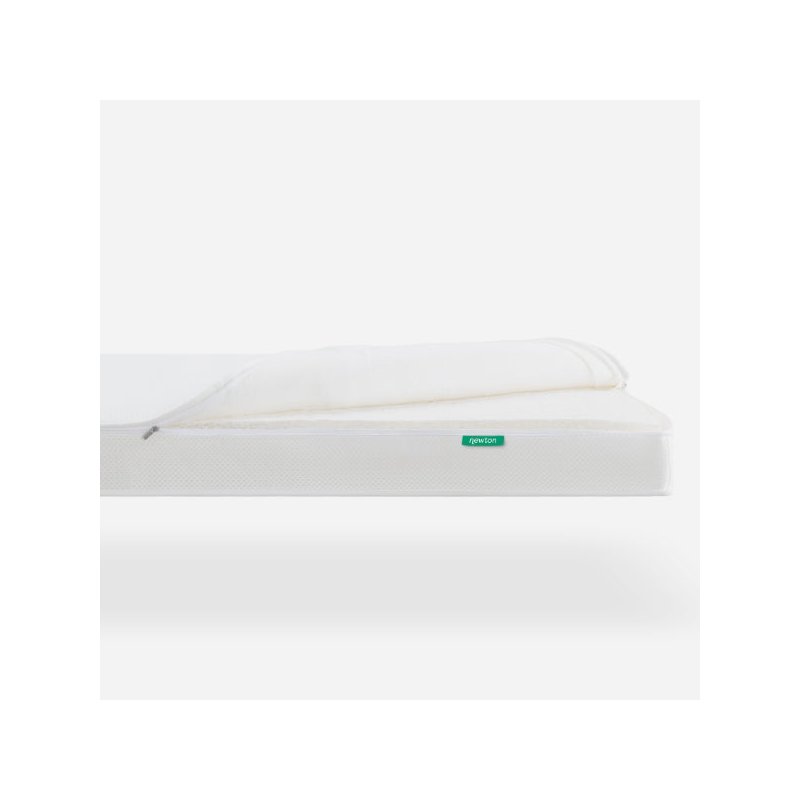
Firm, by an editor’s rating · Mid-range price range
Newton Baby Kids’ Twin
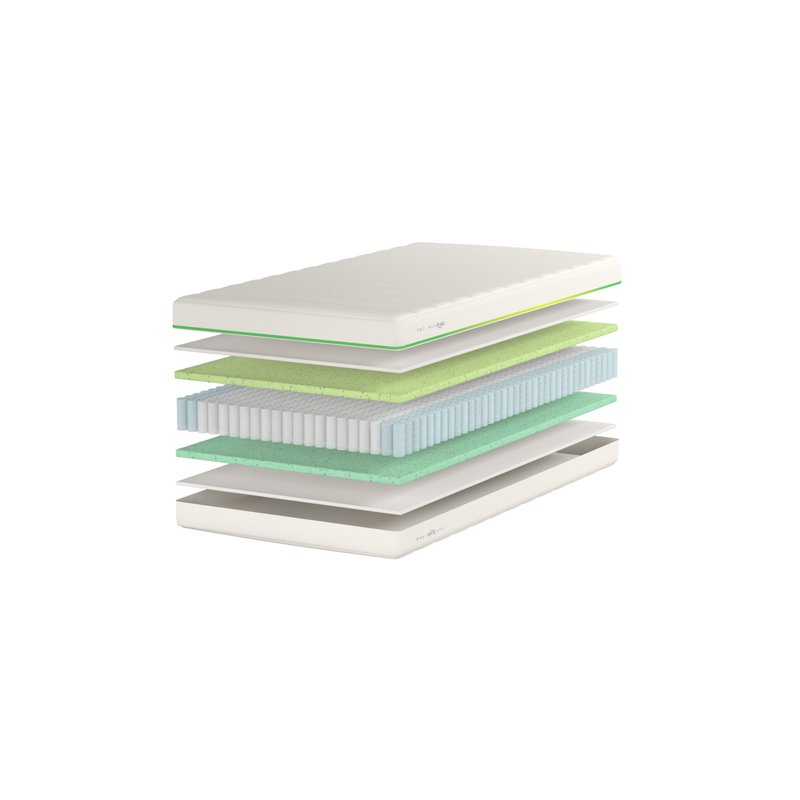
Sleep Foundation rates it firm (7), while Newton says it is less firm than a crib mattress. There’s no foam or coils; the core is a polymer Newton calls Wovenaire. It stands 5.5 inches, and Newton designs it for kids up to 100 pounds.
See what’s in the box ›Why a mattress feels firmer to a light child than to you
Pressing on a mattress or lying on it yourself can give the wrong impression. Sleep Foundation says mattresses tend to feel subjectively firmer to sleepers weighing under 130 pounds, and that sleepers over 230 pounds should look for firmer options.
Most young children are well under that first number, so a bed that feels medium to an adult may feel firmer to them. Sleep Foundation also says thin mattresses often feel too firm for sleepers under 130 pounds, even as it says low-profile mattresses suit children.
An older child’s own preference counts for something here. If they find the bed hard, a softer side or a thicker comfort layer is a comfort decision, and no medical rule covers it.
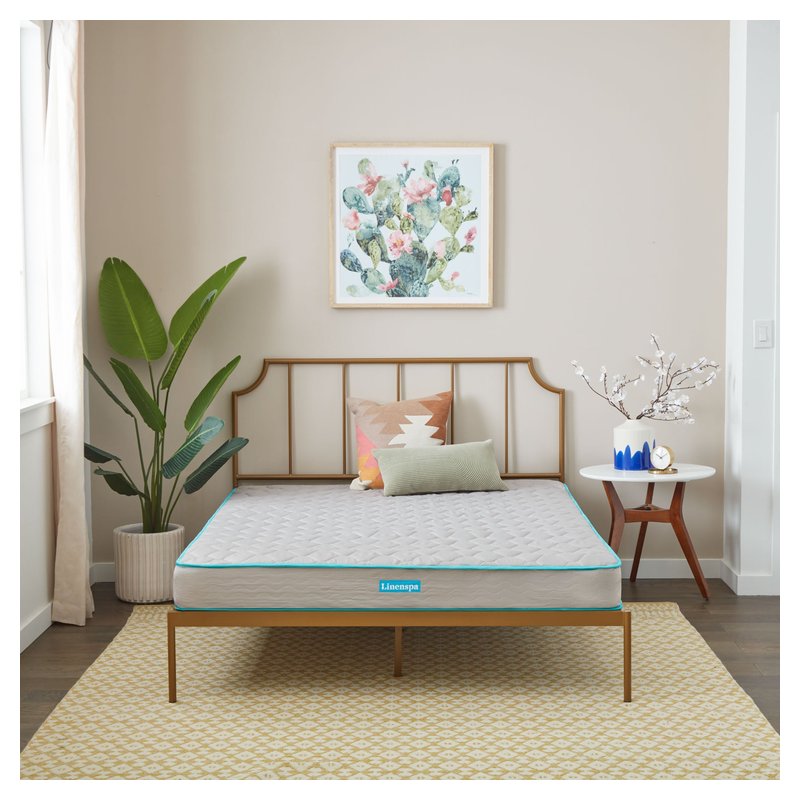
A low-cost coil option · Budget price range
Linenspa 6-Inch Innerspring
Linenspa’s page says both “firm feel” and “medium-firm,” so the label alone doesn’t settle it. It has steel coils with comfort foam quilted into the cover, and no thick memory foam layer. The cover stays on and is spot clean only.
View twin options ›What firmness labels actually tell you
Firmness ratings aren’t a shared standard across the sources we read. The same mattress often gets different words from its maker and from editors.
| Mattress | Brand says | Editors say |
|---|---|---|
| Naturepedic 2-in-1 | Extra firm feel; also firm comfort level | No editor’s rating in our sources |
| Newton Kids’ Twin | Less firm than a crib mattress | Sleep Foundation: firm (7) |
| Bear Cub Kids | Medium-firm, 6.8 of 10 | Sleep Foundation: firm (7) |
| Avocado Eco Organic Kids | Medium-firm in one place, medium feel in another | Sleep Foundation: firm (7) |
| Helix Kids 8-Inch | Firmer side, softer side | Sleep Foundation: medium firm (6), medium soft (4) |
| Nectar Kids 8-Inch | Firmer side, cushioned side | Sleep Foundation: medium (5), firm (7); Sleepopolis: firm (8 of 10) |
Use these labels to compare models, not to measure one precisely. Our firm twin mattresses for kids guide compares the firmest options by each brand’s own rating. If you’re still deciding between sizes, see toddler mattress vs twin.
Back pain, posture and growth: what we could not find
We found no source showing that a mattress’s firmness affects a child’s back pain, posture, growth or height. The research people cite is about adults. A randomized Lancet trial of 313 adults with chronic low-back pain favored a medium-firm mattress, and it enrolled adults only. An NCBI Bookshelf report says the mattress review it included covered 808 adults, with no pediatric studies.
Pediatric pages point elsewhere. HealthyChildren.org says most children’s back pain comes from injuries and strain, and its page doesn’t mention mattresses. American Family Physician doesn’t mention them either. So we won’t tell you a firmer bed will help.
Ask your pediatrician about a child’s back pain or sleep problems instead of changing the mattress first. HealthyChildren.org says to see a pediatrician about back pain if the child is under 10.
For choosing overall, our six-point checklist puts firmness alongside age, height and cleanup. Young toddlers are also where the memory foam question comes in: Sleep Foundation advises against memory foam for young children, yet it lists a memory foam pick in its kids’ guide without an age.
Honest note
Firmness is one of the weakest things to shop on. There’s no medical standard for this age, brands and editors rate the same mattress differently, and one site contradicts itself about young children. We have not tested or used these mattresses ourselves; specs come from the brand or the source named, and your child may simply disagree with the label.
Questions people ask
Does a firm mattress help a child’s back or growth?
We found no source showing that it does. The mattress and back pain research we found enrolled adults only, and the pediatric pages on back pain don’t mention mattresses. Ask your pediatrician about back pain, and think of firmness as a comfort choice, not a health one.
Does the AAP firm mattress advice apply to my 4-year-old?
No. The AAP’s firm-surface recommendations apply to children up to 1 year old, and no medical body sets a firmness for children older than 1. Advice about firmness at age 4 comes from editors such as Sleep Foundation and from mattress brands.
Can a mattress be too firm for a child?
For comfort, it can. Saatva, a brand, says children’s lighter body weight means they don’t need a super-firm mattress, and Sleep Foundation says mattresses feel firmer to sleepers under 130 pounds. Neither is a medical finding, and we found no medical body setting a limit.
Is medium-firm okay for a toddler?
It falls within what editors describe. Sleep Foundation says most toddler mattresses are medium-firm or firm, at 6 to 7 on its scale. That is editorial guidance, not a medical rule. Its toddler guide also advises polyfoam rather than memory foam, so check the top layer as well.
Should a teen’s mattress be softer or firmer?
Sleep Foundation calls medium soft (4) to medium firm (6) the best bet for most teens, and says larger children may prefer a firmer bed. It also says sleepers over 230 pounds should look for firmer options. No medical body sets a firmness for this age.
Read first: best twin mattress for kids · firm twin mattresses for kids
Sources: AAP: Updated safe sleep recommendations · HealthyChildren.org: A parent’s guide to safe sleep · Sleep Foundation: Best toddler mattress · Sleep Foundation: Mattress shopping · The Lancet trial via PubMed · HealthyChildren.org: Back pain in children and teens
This article is general information, not medical advice. Specifications and certifications are each brand’s own and can change. Ask your pediatrician about a child’s sleep, back pain, bed-wetting or allergies, and follow the bed and mattress maker’s instructions.